Every September, we remember the nearly 3,000 people murdered on September 11, 2001. We also confront a question that is difficult to ask without seeming to excuse the crime: How did the men who planned it come to believe that killing strangers, and dying themselves, was justified?
As a psychotherapist, I have thought about that question for years. The 19 hijackers did not suddenly snap. They studied, rehearsed, and carried out a coordinated attack. Understanding their psychology does not diminish their responsibility. It may help us recognize the steps by which people turn grievance into permission to murder.
How grievance became a license to kill
One ingredient was absolutism. Al-Qaeda taught its members to regard its religious and political interpretation as unquestionable truth with divine authority. Another was dehumanization. The people going to work in the World Trade Center or the Pentagon, and the people boarding airplanes, ceased to be individuals with families and ordinary Tuesday-morning plans. They became “Americans,” a category onto which the organization projected blame.
If September 11 still brings up fear, grief, or questions about safety, you do not have to sort through those reactions alone. Therapy for gay men in California or coaching for gay men worldwide, when appropriate, can offer a place to understand what an event has meant in your own life.
Bin Laden’s grievances drew on real political circumstances, including American troops in Saudi Arabia after Iraq invaded Kuwait, American support for Israel, sanctions against Iraq, and U.S. support for Middle Eastern governments he opposed. He also portrayed secularism, sexual freedom, women’s autonomy, and religious pluralism as threats to the world he wanted. Those circumstances and beliefs help explain his propaganda; they do not justify the conclusion he drew from them.
The decisive moral leap was collective guilt: The American government did these things; therefore Americans are responsible; therefore civilians are legitimate targets. Al-Qaeda appointed itself judge, jury, and executioner over people its members had never met. Its promise of martyrdom then recast death during the mission as victory. I cannot know the private psychology of each hijacker. I can identify the ideology and group process that made this violence seem righteous to them.
All 19 hijackers were men. That fact raises questions about masculinity, belonging, and status within militant groups, although sex alone explains nothing about this particular crime. The danger lies in the combination: grievance, rigid certainty, loyalty to a group, dehumanization, and a belief that violence has become a moral obligation.
As a gay man, I recognize a far less violent version of one premise: My certainty gives me authority over you. I have spent my adult life hearing that someone’s interpretation of religion should govern my relationships or restrict my civil rights. That is emphatically not equivalent to flying an airplane into a building. The scale and acts are different. Yet the claim of moral jurisdiction over strangers deserves scrutiny wherever it appears. In a pluralistic society, people can disagree about theology without claiming the right to dominate or dehumanize one another.
What happened to us?
The perpetrators’ psychology is only half the story. The attacks also changed the inner lives of people who survived them, witnessed them, or watched them unfold from a distance. I am a fifth-generation Washingtonian, and I have always found the relative lack of attention to the Pentagon painful. I also think of Flight 93, which crashed in Pennsylvania after passengers and crew resisted the hijackers. Among those passengers was Mark Bingham, a gay rugby player.
Many people can still remember where they were when they heard the news. That vivid memory does not mean everyone developed a clinical trauma disorder. As a clinical social worker, I was trained to see experience at several levels: the individual and family, the community, and the wider society. September 11 affected all three.
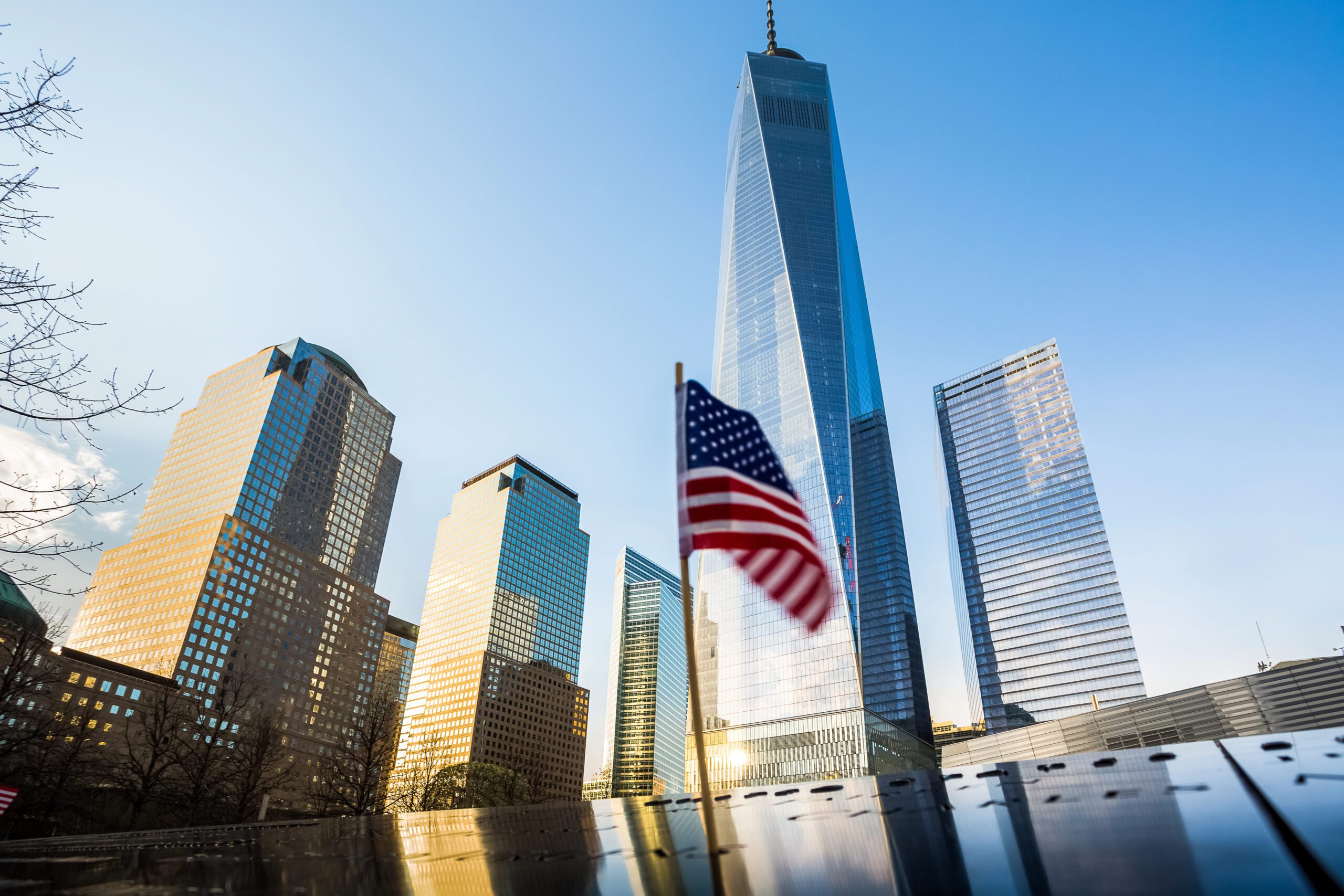
For survivors, first responders, witnesses, and bereaved families, the danger and loss were immediate. New York neighborhoods, firehouses, workplaces, and families lived with missing-person posters, funerals, and an altered skyline. Communities near the Pentagon and the Flight 93 crash site had their own proximity to the attacks. Across the country, people watched in fear and grief as assumptions about safety changed. The Patriot Act, the Department of Homeland Security, and new air-travel procedures became part of the world afterward.
That is one way to understand collective trauma. It does not mean a nation has PTSD. It means an event enters shared memory, rituals, institutions, politics, and everyday expectations. We usually move through the day assuming that our office will still be standing in the evening and that the plane we board will land. September 11 punctured those ordinary assumptions. The World Trade Center had been bombed in 1993, and Oklahoma City in 1995. Yet the scale and live visual impact of 9/11 made a different kind of impression on many Americans.
Why the images and the anniversary still affect us
In the days after the attacks, people had trouble sleeping, watched the footage repeatedly, worried about another attack, checked on loved ones, and startled at airplanes or sirens. Such reactions after an extraordinary event do not automatically indicate a psychiatric disorder. Repeated television images also meant that people far from the attack sites saw the towers fall again and again. For some, a low-flying airplane, smoke, or a sudden news alert could later revive the alarm they felt that day.
The calendar can become another cue. Clinicians recognize anniversary reactions around deaths and frightening events: sadness, anxiety, irritability, restlessness, or bodily tension that may appear before someone consciously notices the approaching date. On September 11, documentaries, memorial ceremonies, photographs, and the reading of names can make that cue collective. Our minds may be trying to stay alert to danger, even when the danger is no longer present in the same way.
If this description sounds familiar, there is no need to decide on your own whether your response “counts” as trauma. Confidential therapy for gay men in California can help you understand what persists and what support might help; coaching may be suitable for different, nonclinical concerns.
Trauma, PTSD, and resilience are different things
Trauma and post-traumatic stress disorder are not synonyms. Fear, grief, intrusive thoughts, disrupted sleep, avoidance, anger, or numbness can follow something horrifying without becoming a lasting disorder. PTSD involves a more specific, persistent pattern of symptoms that causes significant distress or impairment. We should neither diagnose every painful response nor dismiss people whose symptoms endure.
My late colleague and mentor Michael Shernoff, a pioneering gay psychotherapist and clinical social worker in New York, worked with people affected by 9/11. What he observed was variation: some developed lasting symptoms, some struggled for a time and improved, and others who faced genuine danger did not develop PTSD. Resilience does not mean a person was untouched. It means the long-term outcome is not determined by exposure alone. Connection, practical support, and the social response to suffering can matter enormously, as the different experiences of veterans returning from different wars remind us.
Grieving strangers and living with chance
Families who lost someone grieved a particular voice, a chair at the table, a person who did not come home. For a surviving partner, grief can also unsettle a sense of identity, something I explore in my article on gay widowers, loss, and identity. Millions of others mourned people they had never met. We saw photographs, heard fragments of lives and final calls, and imagined our own loved ones in those offices or on those flights. The relationship was not personal, but the identification was. Terrorism aims to reach far beyond the people directly attacked.
Survivor guilt could be especially painful for someone who escaped, missed work that morning, changed a flight, or lost colleagues. “Why them and not me?” is a question I know in another context. I was diagnosed with HIV in 1990 and have lived long enough to ask why I survived when others did not. I wrote more personally about that history in my reflection on 30 years of living with HIV. There is no satisfying answer that turns chance into justice. Sometimes the mind keeps searching because randomness itself is so hard to bear.
“Welcome to my world”
On September 11, I was in Miami at a professional conference on gay men and HIV, conducted in Spanish. I checked email in the hotel business center, using a slow AOL connection, and saw an image of the first tower burning. The conference dissolved. With flights grounded, I spent days watching television, including the collapse of the towers, before I could return to Los Angeles. I remember feeling strangely sleepy as the coverage played. I cannot diagnose that memory retrospectively, but it remains part of how I recall that day.
Outside the hotel, gay men were still flirting and looking for sex, even while many businesses were closed and nobody knew what would happen next. It felt surreal at the time. Yet people do not stop being human during catastrophe. We eat, seek comfort, make jokes, look for connection, and sometimes have sex. Life and death can occupy the same space.
A gay male colleague described another response to a straight female coworker: “Welcome to my world.” He was not equating 9/11 with the AIDS epidemic. He meant the experience of being vulnerable because someone places you in a category and decides you deserve harm. Gay men of my generation knew the need to assess whether it was safe to hold another man’s hand in public. During the AIDS crisis, we lived with illness and repeated loss alongside stigma, moral condemnation, and political indifference. Other marginalized people have their own histories of vigilance; women, disabled people, and racial and religious minorities did not need September 11 to learn that public safety is unevenly distributed.
For many Americans who had not lived with that awareness, the attacks made it newly imaginable. The histories are not interchangeable, and this comparison must never erase their differences. It does illuminate a psychological mechanism: when a person becomes only “American,” “Muslim,” “gay,” “Jewish,” “immigrant,” or any other category, empathy becomes easier to suppress. After 9/11, resisting collective blame against Muslims was part of resisting the very logic that had helped produce the attacks.
Twenty-five years later
We cannot understand September 11 only by studying the men who committed it. We also have to ask what happened to those who absorbed the shock. On one side were grievance, absolutism, dehumanization, and collective guilt. On the other were fear, mourning, altered assumptions about safety, and, for many, gradual adaptation. Both stories show how people try to make sense of danger. We can do that through remembrance, connection, and reflection, or through certainty that turns other people into enemies.
These questions also arise in my work with gay men whose lives have been divided into “before” and “after” by AIDS, violence, assault, illness, a death, a natural disaster, workplace harassment, or another loss. Sometimes the aftermath looks familiar: nightmares, intrusive memories, avoidance, or constant vigilance. Sometimes it looks like irritability, numbness, mistrust, sexual withdrawal, or a need for control. I discuss those longer-term effects in moving on in life after trauma and the work of reclaiming your life after trauma. Good psychotherapy asks what happened, what a response may be protecting against, and whether someone needs time, support, or treatment for a persistent condition.
Twenty-five years on, we remember the people who died in New York, at the Pentagon, and in Pennsylvania. We remember the lives that continued under altered conditions. And we keep asking how human beings can hold fear and grievance without making strangers pay for them.
If this article speaks to something still present in your life, I invite you to talk with me about it in a free 15-minute consultation. I offer individual therapy for gay men in California and coaching for gay men worldwide when coaching is the appropriate service. You can email Ken@GayTherapyLA.com for therapy or Ken@GayCoachingLA.com for coaching, or call or text 310-339-5778. Together we can consider whether working together would be a good fit.
About the author
Ken Howard, LCSW, CST is a psychotherapist and AASECT-Certified Sex Therapist with over 30 years of experience working almost exclusively with gay men. A former USC faculty member, he is also the host of The Gay Therapy LA Podcast, where he explores the psychology, relationships, and inner lives of gay men—and he brings that same depth and practicality into his work with clients through therapy (California) and coaching (worldwide) via telehealth.
