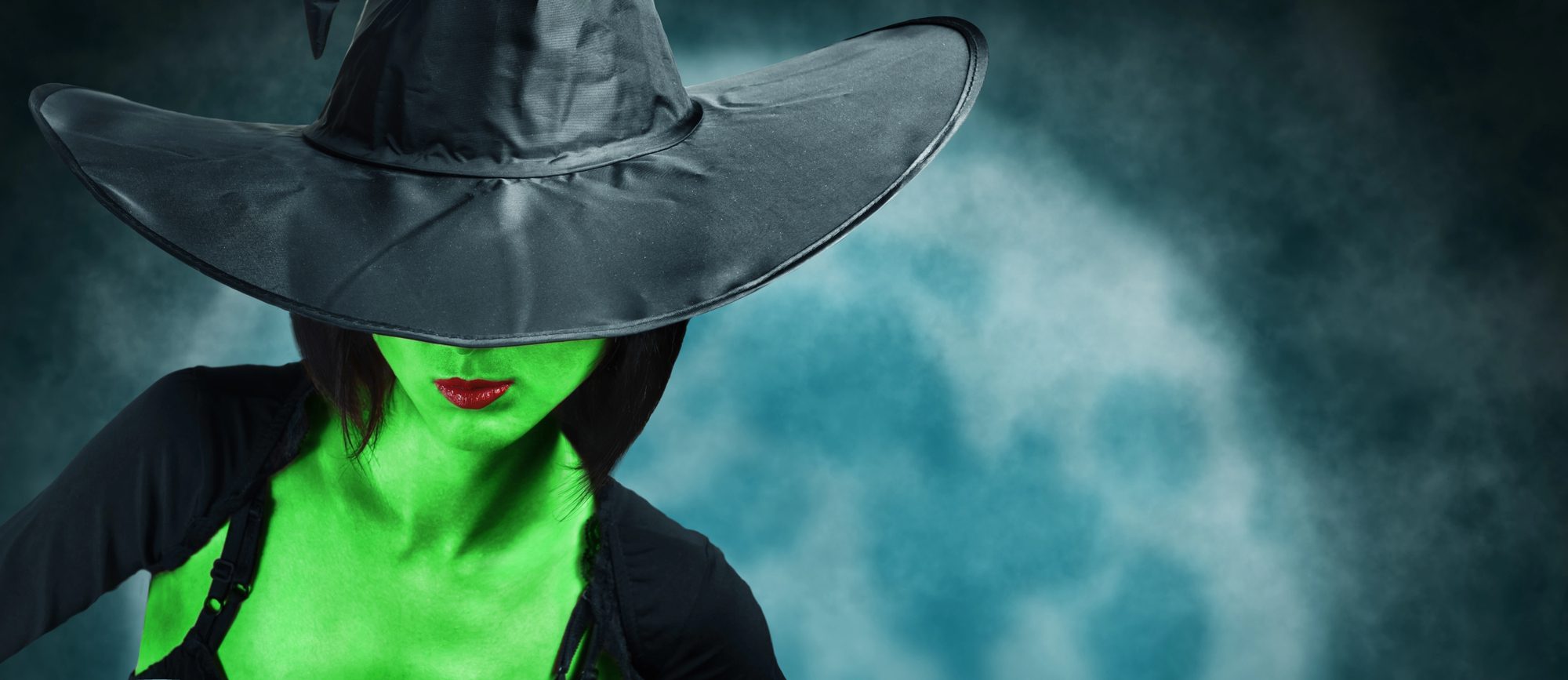
“Because happy is what happens when all your dreams come true…”
That line from Wicked’s Act II number, “Thank Goodness,” always carries an irony that cuts deep: happiness is supposed to arrive when dreams are fulfilled — but what happens when the world changes so much that the dreams themselves are denied?
As the upcoming film’s second half, Wicked: For Good revisits the original show’s darker second act, its themes feel eerily relevant again. Wicked’s fictional Oz has always mirrored our own world, such as when it premiered on Broadway in 2003, and audiences recognized in the song, “Popular” Glinda’s line about “great communicators,” that was a dig reference to the “great communicator” moniker assigned to Ronald Reagan, a noted anti-gay President who will live in infamy for doing nothing about the first years of the AIDS crisis (and not much after; it was Bill Clinton who ushered in more research and services efforts), but in 2025, the “Wicked” movie versions’ political resonance is sharper than ever.
Elphaba, branded “Wicked,” stands against a regime that silences those who dare to speak the truth. Her compassion for the oppressed “Animals” — beings stripped of their voices and humanity — becomes her act of rebellion. And when the Wizard’s illusion of benevolence unravels, we’re reminded that tyranny doesn’t always roar; sometimes it smiles.
The Wizard Has No Magic — Only Propaganda
One of Wicked’s most profound twists is that the Wizard himself has no real magic. His power comes from control, illusion, and fear — the manipulation of others into silence.
He rules not through spells, but through systems:
- Laws restricting where Animals can live and work.
- Schools that teach lies about who they are.
- Bureaucracies that disguise cruelty as “order.”
- Propaganda that reframes oppression as “safety.”
Sound familiar?
In 2025, we’re watching real-world versions of this unfold:
- Rainbow sidewalks — symbols of inclusion — are literally being dug up in cities in Texas and Florida.
- Transgender Americans are being told they cannot have an “X” gender marker on their passports.
- Trans servicemembers are reportedly being removed from the military, undoing years of progress.
- Immigrants and even naturalized citizens live in fear of deportation or ICE raids.
- And the Supreme Court, now more conservative than ever, is openly considering taking up a case that could overturn Obergefell v. Hodges, the ruling that granted marriage equality nationwide.
These are not coincidences; they are orchestrated regressions. And they function through the same mechanisms the Wizard used: fear, policy, and propaganda.
The goal is simple — to silence.
“Something Bad is Happening in Oz…”
When Dr. Dillamond, the Goat professor, tells Elphaba in the song “Something Bad” that Animals are losing their ability to speak, it’s both literal and metaphorical. “Something bad” is the euphemism the regime uses to avoid saying the truth: that systemic cruelty has become normalized.
That line could easily describe our news cycle. “Something bad is happening in America” has become a kind of daily understatement. From anti-trans legislation to book bans to “Don’t Say Gay” laws, queer people are being told, once again, to disappear quietly.
It’s all designed to create silence — to strip away visibility, dignity, and the power of public voice.
The Mental Health Impact of Political Silencing
As a psychotherapist who has worked with gay men for over 33 years, I can tell you that these political and cultural regressions are not abstract—they land in my clients’ nervous systems, relationships, and daily lives.
When your community is targeted, your brain shifts into survival mode.
- You may feel hypervigilant — scanning for threats online or in public.
- You may feel helpless, wondering, “What’s the point of fighting?”
- You may feel ashamed for even caring, or fear being “too political.”
- You may feel angry — and not know what to do with that anger.
These are normal responses to oppression. They are the body’s alarm bells in a world that once again tells gay men, “You’re too loud, too visible, too much.”
But staying in that survival mode for too long erodes your mental health. Chronic stress hormones elevate; sleep and libido drop; depression and anxiety creep in. It’s exactly what authoritarian systems rely on — that exhaustion that makes you too tired to resist.
The Silencing of 2025 — and Its Familiar Script
If this all feels like déjà vu, it’s because it is.
We’ve seen this play before: fear, division, scapegoating, denial. Whether it’s the AIDS crisis of the 1980s, the Lavender Scare of the 1950s, or the book bans of today, the tactic is the same: create a false sense of moral panic, label it “protection,” and then slowly dismantle rights under that banner.
When the Wizard tells the people of Oz that Elphaba is dangerous, he’s describing every queer, trans, immigrant, or nonconforming person who refuses to conform to his illusion of safety. He’s saying, “Silence her before her truth disrupts our comfort.”
This is how oppression maintains itself — not always through violence, but through narrative control.
Gay Men and the Return of State-Sanctioned Anxiety
In sessions lately, I hear gay men saying things like:
- “I feel like we’re going backwards.”
- “What if they really overturn marriage equality?”
- “What’s next — criminalizing being gay again?”
These fears aren’t paranoia; they’re pattern recognition. For gay men who lived through the early AIDS years, these echoes are traumatic. The sense of social abandonment — of being told “you’re on your own” — returns in new forms.
And for younger gay men who grew up in the post-Obergefell era, this is their first experience of true systemic betrayal. They were told equality was “settled.” Now they’re learning that in America, equality is never permanent — it must be defended continuously.
The Psychology of Resistance: Agency Over Apathy
Psychologically, the antidote to oppression is agency — the belief that your actions still matter.
Activism isn’t just civic engagement; it’s mental health care. It restores a sense of control, combats learned helplessness, and strengthens community bonds, all of which protect against depression.
Here’s what that looks like in practice:
1. Stay Active — Politically and Socially
Vote in every election, local and national. Support organizations like the ACLU, Lambda Legal, and Human Rights Campaign. Visibility is protective. Oppression thrives in silence; activism is noise therapy for democracy.
2. Form Coalitions
Elphaba’s revolution failed when she stood alone — it gained power when others joined her. Our liberation is tied to every marginalized group: trans people, immigrants, women, people of color. The Wizard’s tactic is to divide us; our survival comes from unity.
3. Confront Internalized Oppression
When gay men support politicians or policies that strip our rights, it’s not “diversity of opinion.” It’s internalized oppression — the learned belief that our lives don’t deserve full equality.
To those “Gays for Trump” or “Log Cabin Republicans,” I say: you’re aligning with a regime that would erase your marriage, your identity, and your dignity for political theater. That’s not strength. It’s self-abandonment.
4. Channel the Spirit of Stonewall
Stonewall wasn’t a polite petition; it was a riot. It was queer people — drag queens, trans women, hustlers, outcasts — saying “enough.” It was the opposite of silence. It was messy, loud, imperfect, and transformative.
We need that energy again: not in violence, but in unrelenting insistence that our lives matter and will not be erased.
5. Balance Activism With Self-Care
Burnout is real. Resistance is a marathon, not a sprint. Rest, connect, eat, move, sleep. Joy itself becomes rebellion. In a world that wants you fearful, being well is a radical act.
“The Wizard and I” — The False Promise of Assimilation
Early in Wicked, Elphaba dreams of working with the Wizard — of belonging. But by Act II, she realizes the cost: to “fit in,” she must betray her conscience. Many gay men know that feeling — the pressure to conform to a heteronormative world that accepts us only when we stop being too visible, too sexual, too different.
Assimilation has its comforts, but it can be its own silencing. When we trade authenticity for approval, we start losing our voice, just like the Animals of Oz.
Real mental health — real self-esteem — comes from integration: being who we are in private and in public, without apology.
Finding Meaning “For Good”
The song “For Good” closes Wicked with quiet reconciliation between Glinda and Elphaba. It’s about legacy — how our lives change others. In a time of political regression, that message takes on new urgency: our work as gay men now is to influence our world for good, both morally and mentally.
Being “for good” means:
- For the greater good — collective liberation, not just personal comfort.
- For good — as in permanent, steadfast, resilient.
We fight, not because we expect an easy victory, but because we must preserve what’s humane in us.
Resilience as Resistance
Gay men have always lived at the intersection of trauma and triumph. From AIDS activism to marriage equality, our history is a story of endurance through creativity, wit, and love.
We’ve used humor as armor, art as protest, and community as therapy. That’s resilience — not denial, but defiance.
Today, that resilience must evolve into political self-care:
- Call your representatives.
- Support queer artists.
- Show up for rallies, for fundraisers, for each other.
- Refuse to disappear.
Because silence, as Wicked reminds us, is the Wizard’s greatest spell — and breaking it is the truest form of magic we have.
Therapy and Coaching as Tools of Liberation
As a therapist and coach who specializes in gay men’s mental health, I see advocacy as part of self-esteem and recovery. When you take action — political, personal, or relational — you reverse the emotional damage of silencing. You practice self-agency. That’s why therapy and coaching are not luxuries; they’re tools of liberation.
In therapy, we strengthen your boundaries, build resilience, and help you find your voice again. In coaching, we translate that into tangible life goals — better relationships, meaningful work, creative projects — the lived proof that you deserve to exist fully.
“Because I Knew You, I Have Been Changed…”
At the end of Wicked, Glinda and Elphaba say goodbye, both changed forever. That’s what solidarity does — it changes us for good.
We may not have magic, but we have what the Wizard never did: truth, compassion, and community.
And those are the real instruments of power.
When we fight the silencing of gay and trans voices, we’re not just defending rights — we’re defending mental health, dignity, and the human spirit itself.
Because we know — and because we remember — that goodness isn’t compliance. It’s courage.
Therapy for Gay Men in California: GayTherapyLA.com
Coaching for Gay Men Worldwide: GayCoachingLA.com
310-339-5778 • Ken@GayTherapyLA.com
